FIKOM FUN FACT: ARTIFACTS AS A SILENT LANGUAGE THAT TELLS YOUR IDENTITY
Hello, Fikomers!
Did you know that in communication studies, the objects you use every day, such as your phone, the color of your jacket, your bag, shoes, or even small accessories, actually convey messages without a single word being spoken?
This phenomenon is known as artifacts, a form of nonverbal communication related to objects attached to or used by an individual. Artifacts are part of what is called an “aesthetic code” a system of signs that shapes how others perceive who we are.

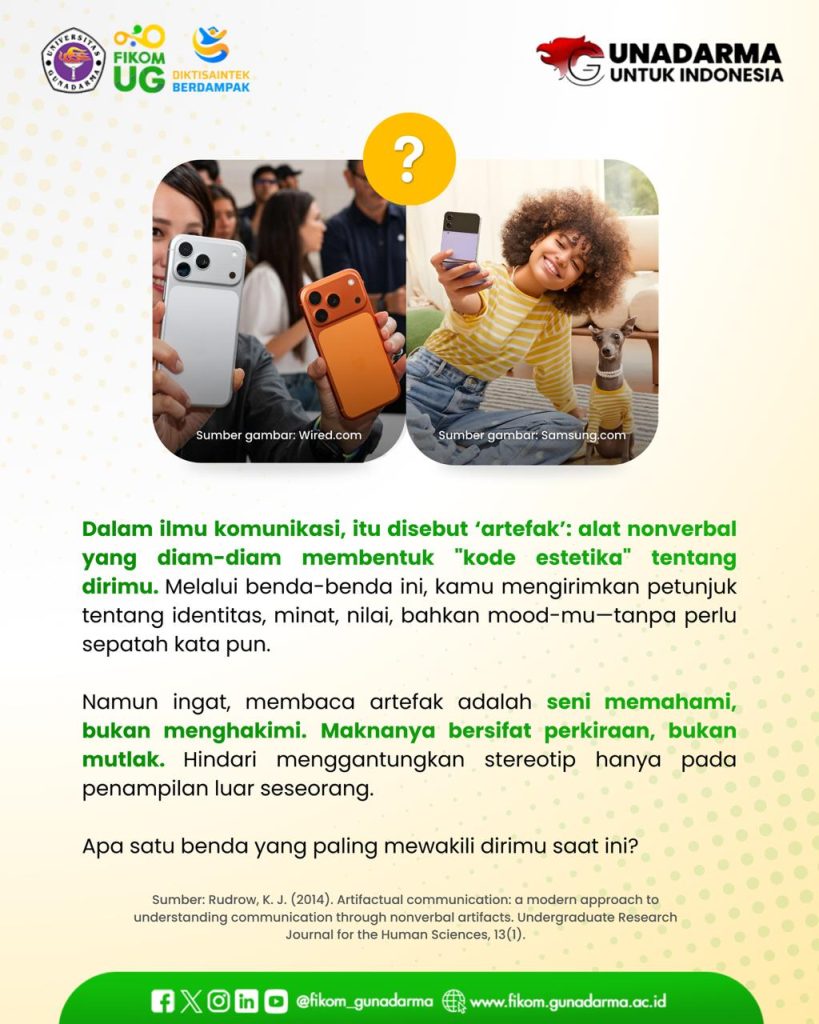
Objects as Representations of Identity
The colors you wear, the style of your shoes, the type of gadget you use, or the design of your bag can provide clues about:
- your lifestyle,
- your interests and hobbies,
- the values you uphold,
- even your mood at that moment.
For example, someone wearing formal attire may wish to project a professional image. Meanwhile, choosing bright colors may be associated with an expressive or optimistic personality.
Without realizing it, every object we choose to use becomes part of how we communicate our identity.
Reading Artifacts Is Not About Judging
However, it is important to remember that interpreting artifacts does not mean labeling or judging someone. The meanings we derive from artifacts are interpretative and contextual, they are assumptions, not absolute truths.
Misinterpreting artifacts can lead to stereotypes and excessive prejudice. Therefore, from a communication perspective, understanding artifacts is about reading signs with empathy and critical awareness, not merely judging appearances.
Be Wise in Interpreting and Presenting Yourself
As communication students, it is important for Fikomers to realize that your appearance and the objects you use are part of the message you send to those around you. At the same time, we must also be wise when interpreting messages from others.
Because in communication, meaning is always constructed through interaction, not only from what is visible, but also from context and social relationships.
So, Fikomers, which object best represents you right now?
Take a moment to reflect, you may already be “speaking” through your artifacts every day without even realizing it.