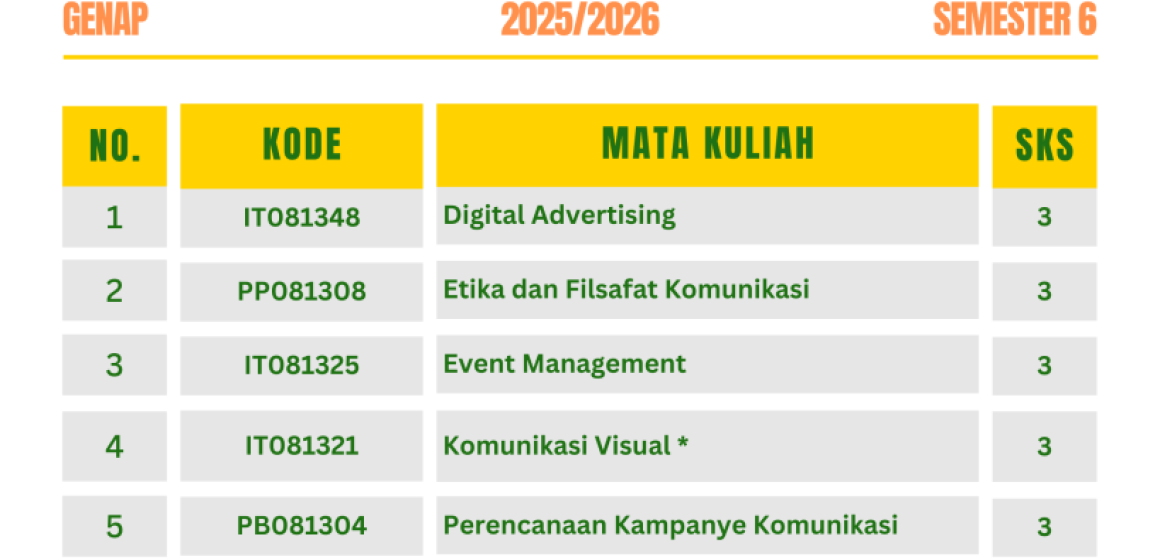
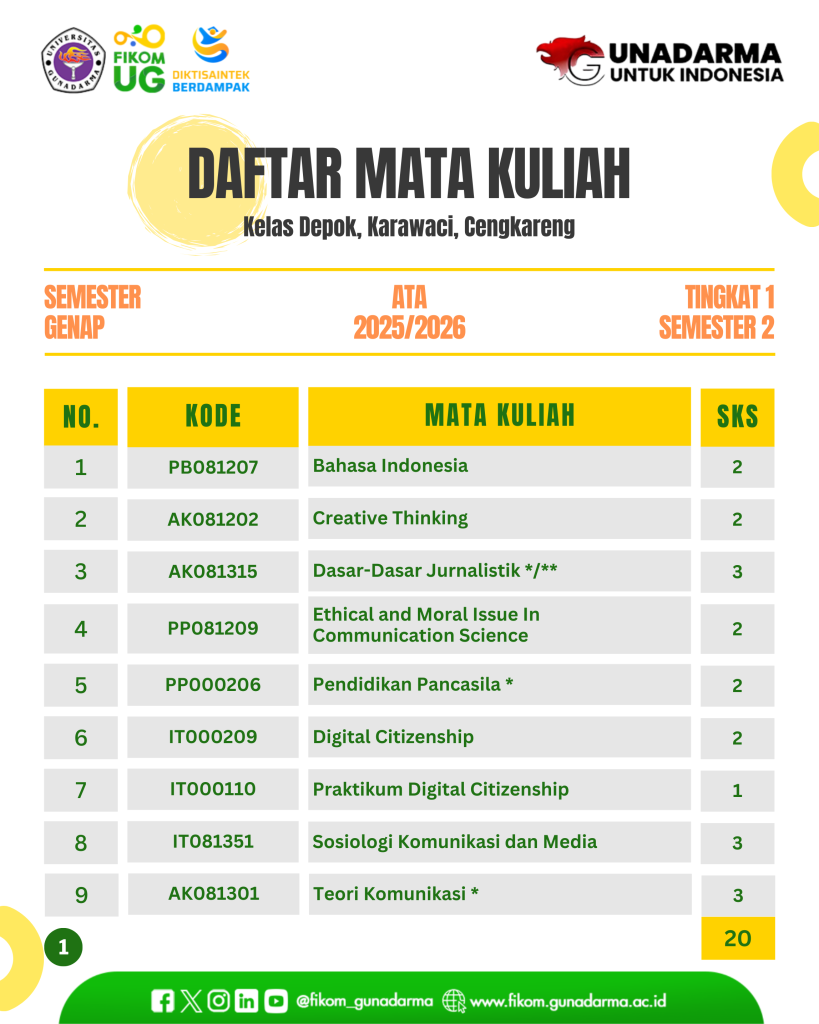
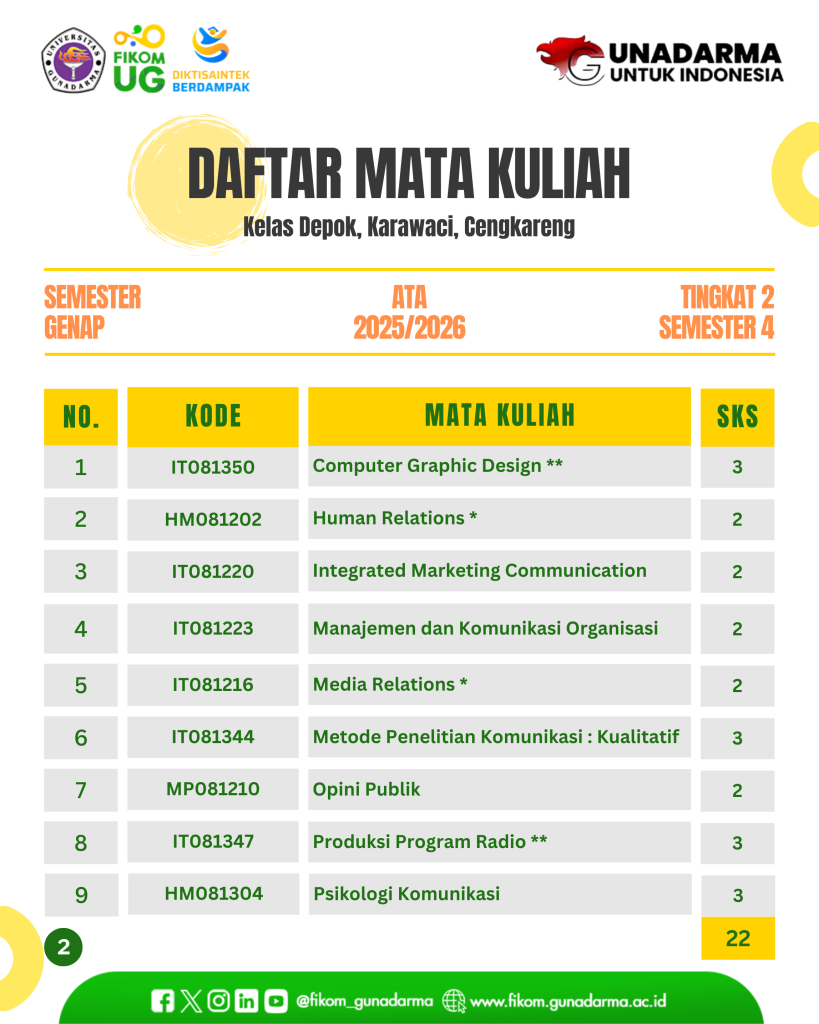
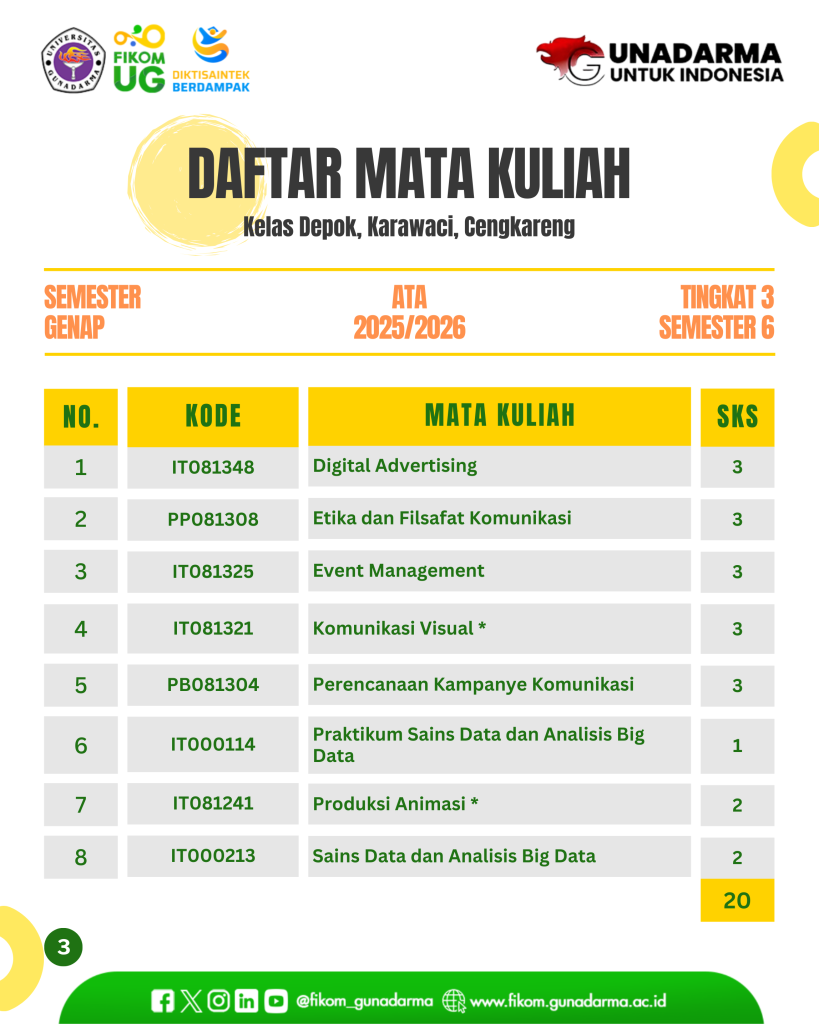
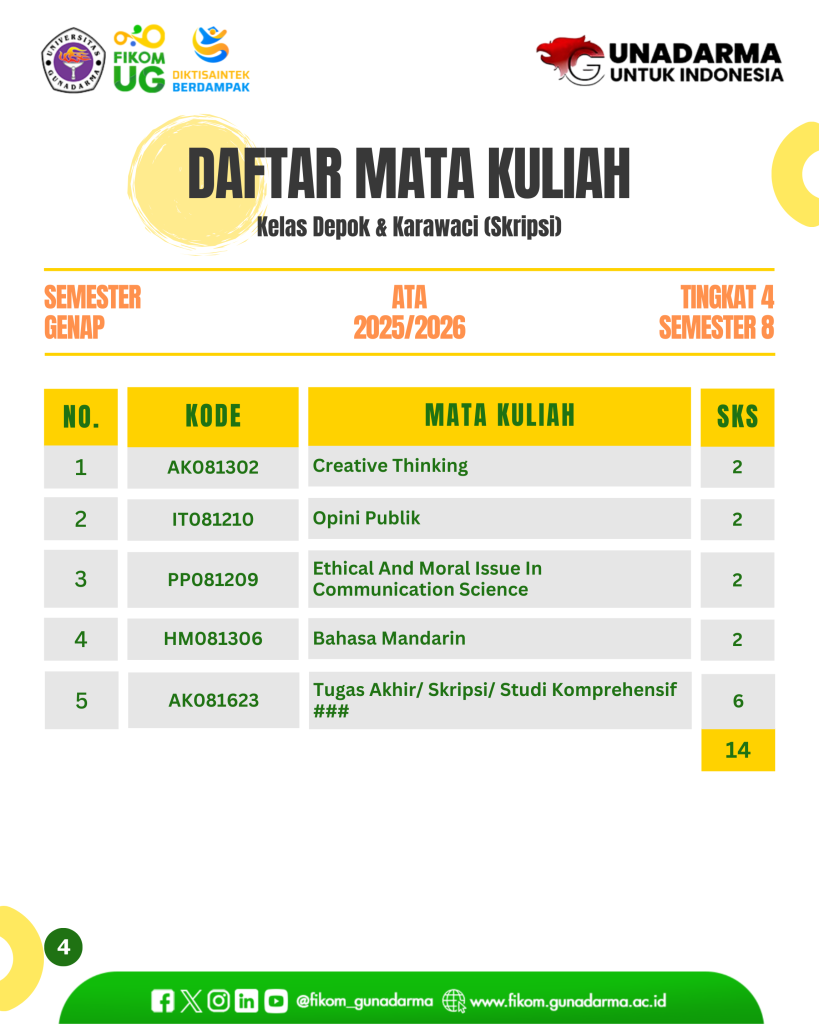
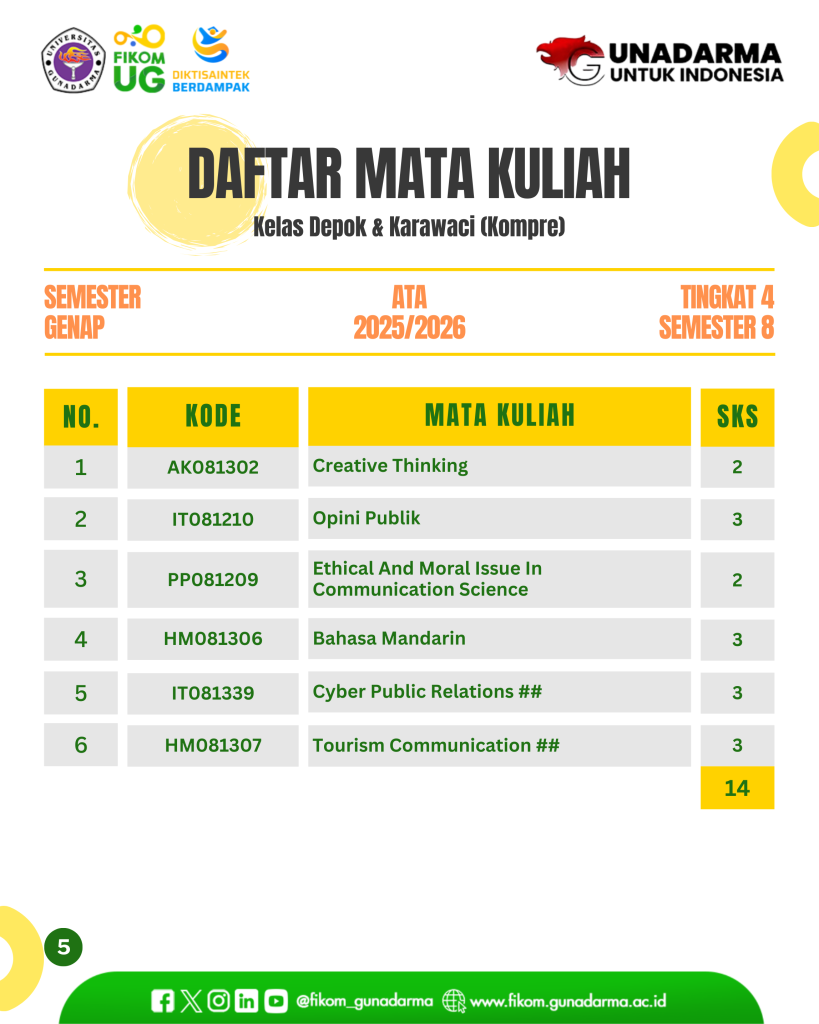
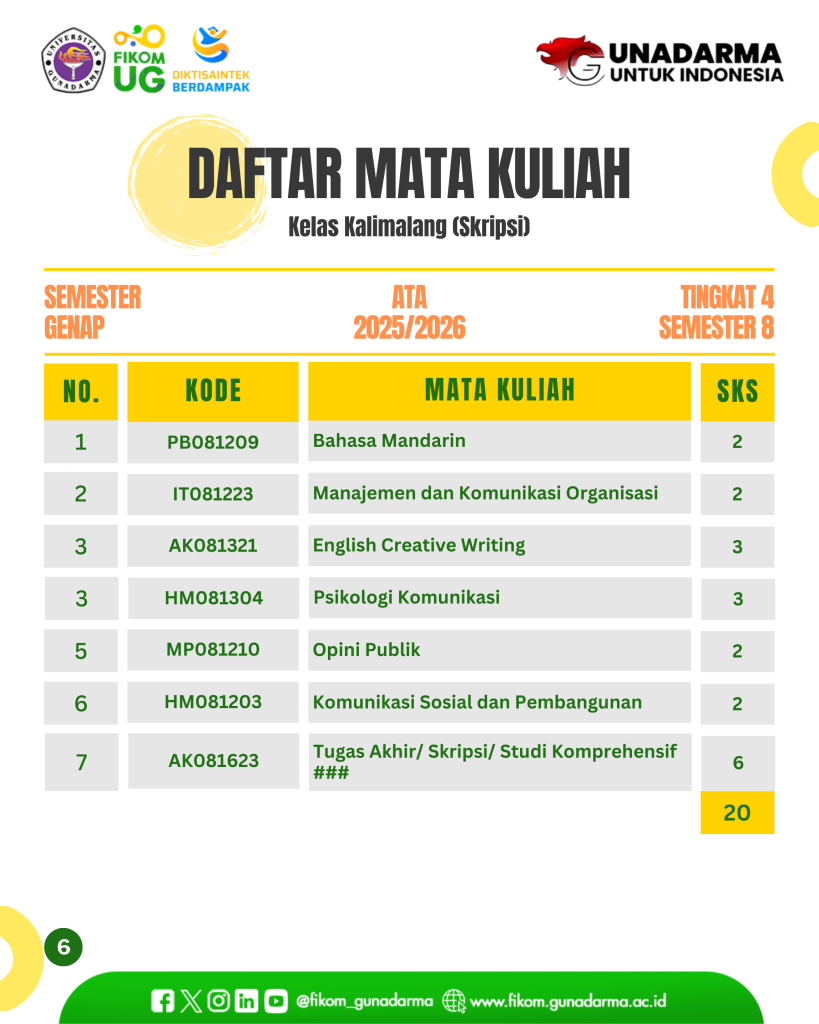
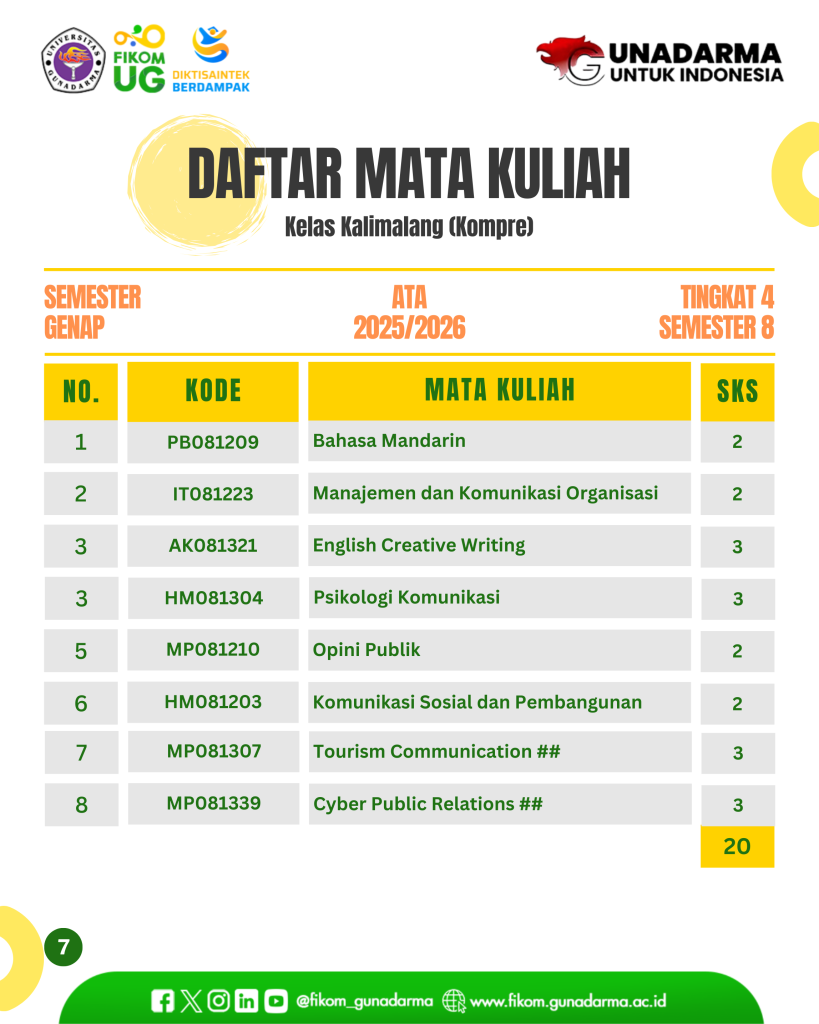
The even semester of the academic year 2025/2026 has begun. Below is the list of courses that will be taken at each level. These courses are designed to support both theoretical understanding and practical application in the field of Communication Studies, from foundational concepts to their implementation across various areas.
We hope that through these courses, you will expand your knowledge, sharpen your skills, and successfully navigate the semester. Happy learning, and stay motivated throughout your academic journey!
Did you know that in everyday spontaneous conversations, the rate of miscommunication or misunderstanding can reach around 35–42%? This figure shows that misunderstandings are actually quite common in human interactions.
Interestingly, research conducted by Paxton et al. (2021) suggests that a little “messiness” in communication can actually benefit the interaction process. Rather than always being harmful, ambiguity in conversation can trigger more active engagement among communication participants.
When the Brain Works Harder
When ambiguity or misunderstanding occurs, our brains automatically work harder to:
clarify the meaning of the message,
revise the assumptions that arise,
and align perceptions with the conversation partner.
This process makes communication more dynamic and interactive, rather than passive. We become encouraged to ask questions, restate explanations, or provide additional context so the message can be understood more accurately.
Communication Is Not About Perfection
From a communication science perspective, effective interaction does not necessarily mean communication that is free from mistakes. What matters more is how we respond to differences in understanding.
The ability to listen, clarify, and open space for dialogue becomes essential to keep conversations constructive.
When managed well, misunderstandings can become opportunities to deepen discussions, enrich perspectives, and strengthen communication relationships.
Misunderstandings Can Spark Meaningful Conversations
So, Fikomers, if a misunderstanding happens during a conversation, don’t immediately see it as a communication failure. It might actually be the beginning of a more engaging and meaningful discussion.
Because in the end, communication is not only about delivering messages, but also about a shared process of building understanding.
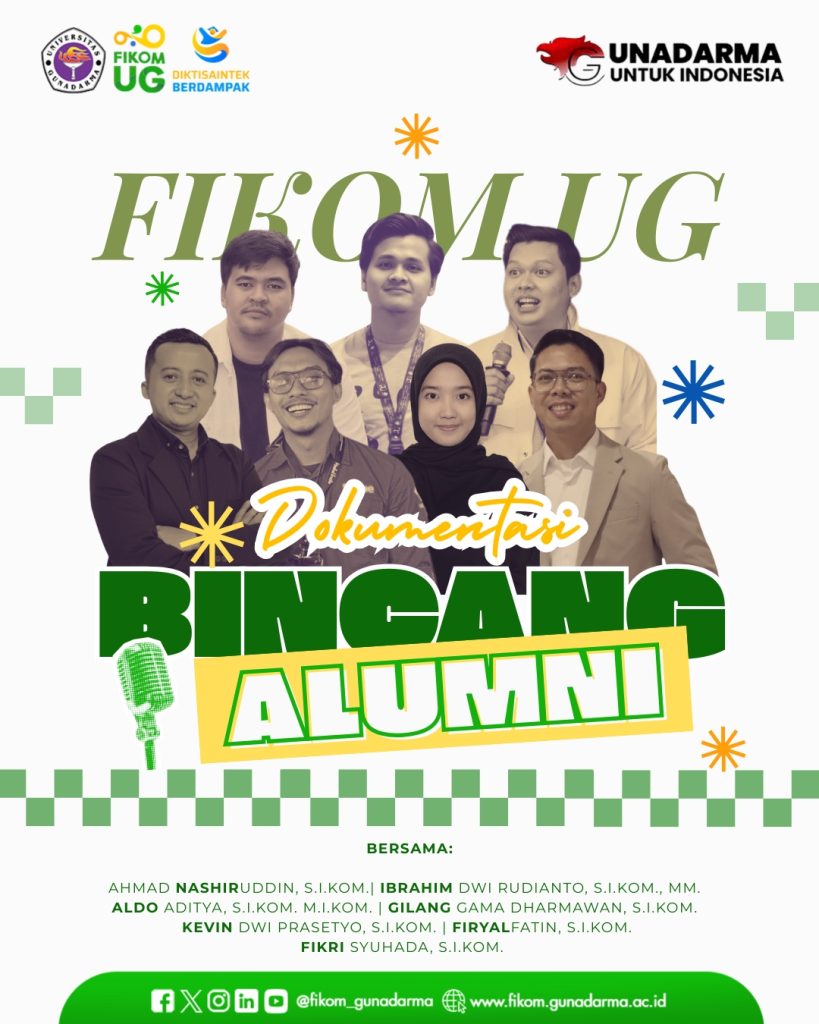
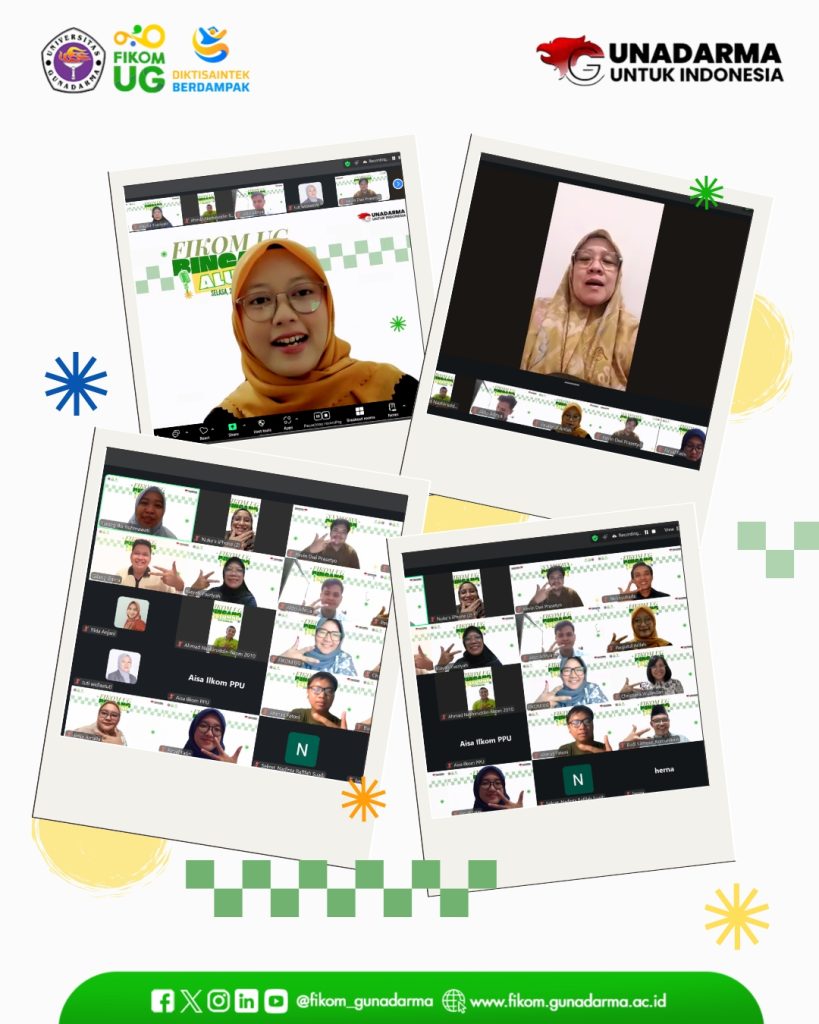
Hello, Fikomers! The Faculty of Communication Sciences, Universitas Gunadarma, held the FIKOM UG Alumni Talk on Tuesday, January 20, 2026. This event served as a strategic forum that connected alumni professional experiences with academic development within the campus environment.
The Alumni Talk was not merely a reunion event, but a constructive dialogue space to share workplace experiences, industry dynamics, and relevant insights for strengthening the curriculum and graduate competencies.
A Communication Industry in Constant Transformation
During the discussion, alumni emphasized that today’s communication industry demands more than just theoretical knowledge. The industry requires professionals who can integrate:
measurable communication strategies,
the effective use of digital technology,
data-driven analytical skills,
and adaptive soft skills that respond to change.
The presence of Artificial Intelligence (AI) was also highlighted. AI is understood as a strategic support tool that can enhance efficiency and analysis, but it is not a replacement for human creativity. Amid rapid technological development, skills such as critical thinking, creativity, communication ethics, and interpersonal communication remain the core foundations of a professional communicator.
Expanding Career Opportunities
The good news is that career opportunities for Communication Studies graduates continue to expand across various sectors—including media, digital marketing, public relations, corporate communication, content strategy, as well as creative and technology industries.
Alumni stressed the importance of students being prepared to build strong portfolios, expand professional networks, and continuously develop themselves in order to remain relevant to industry demands.
Synergy for an Adaptive Curriculum
Alumni feedback plays a vital role in academic development. Through forums like this, FIKOM UG strives to align its curriculum with real-world industry needs, ensuring that graduates are not only theoretically competent but also professionally prepared to face future challenges.
The FIKOM UG Alumni Talk 2026 stands as evidence of the faculty’s commitment to building an educational ecosystem that is responsive, collaborative, and future-oriented.
Thank you to all alumni who shared their experiences and insights. Together, let us cultivate Communication Studies graduates who are adaptive, innovative, and impactful.
Hello, Fikomers. Are you ready to begin the Second Semester (ATA) 2025/2026? Make sure to take note of these important dates so you don’t miss any key academic activities.
📚 Lectures before Midterm Exams begin on March 2, 2026 🌙 Eid al-Fitr Holiday Break: March 16-28, 2026 📝 Online Course Registration (KRS): March 4-April 18, 2026 📌 Final Deadline for KRS Printing: May 16, 2026 📖 Midterm Examinations (UTS): May 25-June 13, 2026 📚 Lectures after Midterms Resume: June 22, 2026 📝 Main Examination: July 20-25, 2026 🎓 Final Semester Examinations (UAS): July 27-August 8, 2026
Be sure to plan your study strategy carefully and stay organized to make this semester a success.
đź“… Save this post and share it with your friends!
In an effort to align learning strategies and enhance academic quality, the Faculty of Communication Sciences, Universitas Gunadarma, is organizing a Coordination Meeting for all Communication Studies lecturers. This meeting serves as a forum for evaluating the teaching and learning process, strengthening synergy, and ensuring a shared understanding in the implementation of academic activities for the ongoing semester.
🗓 Saturday, February 28, 2026 ⏰ 1:30 PM (WIB) 💻 Via Zoom Meeting
All lecturers are expected to attend punctually and participate in the meeting until its conclusion. Let us strengthen our collective commitment to delivering learning experiences that are excellent, adaptive, and impactful.
Hello, Fikomers! The term job hopping is becoming increasingly common, especially among Generation Z. The phenomenon of changing jobs within a relatively short period—around 1–2 years, often sparks debate: is it a sign of disloyalty, or rather an adaptive career strategy?
From the perspective of organizational communication and work motivation, this phenomenon can be explained through Herzberg’s Two-Factor Theory.
Two Factors Influencing Job Satisfaction
According to Herzberg, there are two groups of factors that influence job satisfaction and motivation:
Intrinsic Factors (Motivators)
These factors relate to internal aspects that provide deep meaning and satisfaction at work, such as:
the need for personal growth,
a sense of responsibility,
achievement and recognition,
and the meaning of the work itself.
For many Gen Z individuals, a job is not merely a source of income, but also a space for self-actualization and personal development.
Extrinsic Factors (Hygiene Factors)
These factors are related to the work environment, such as:
flexible work culture,
supportive team relationships,
compensation and salary systems,
and opportunities for promotion and career advancement.
When these factors are not fulfilled, job satisfaction declines, leading individuals to seek new environments that better align with their expectations.
Job Hopping: Trend or Strategy?
For Gen Z, job hopping is often viewed not merely as a trend, but as a strategy to:
accelerate career growth,
broaden professional experience,
and find a work environment aligned with personal values and goals.
However, changing jobs within a short timeframe also carries risks, such as repeated adaptation processes, challenges in building long-term professional reputation, and potential stigma regarding loyalty.
A Decision Based on Purpose
From a communication perspective, career decisions are part of constructing one’s professional identity. As long as they are based on clear goals, thoughtful reflection, and measurable strategies, job hopping can be a rational step in one’s career journey.
This phenomenon illustrates how younger generations interpret work differently, more dynamically, flexibly, and growth-oriented.
So, Fikomers, do you think job hopping is more of a trend or a strategy? Let’s understand this communication phenomenon through theoretical lenses, so we don’t merely judge, but truly comprehend.
Hi Gunadarma Students! 👋✨ Do you have a great business idea but don’t know where to start? Want to scale up your business, get funding, and receive direct mentorship from experts?
The Student Entrepreneurship Development Program (P2MW) 2026 is here for those of you who want to turn your business ideas into reality! This program is a great opportunity to develop your entrepreneurial spirit while strengthening your business foundation from scratch until it’s ready to compete!
Now it’s your time to join the socialization session and fill out the registration link below!
Hello, Fikomers! The Faculty of Communication Sciences, Universitas Gunadarma, hosted an inspiring session with Ahmad Bachtiar Rifai, GM of Marketing at tvOne, in a forum dedicated to sharing insights on the dynamics and demands of today’s marketing world. This session became a strategic discussion space to understand the competencies required to compete in an increasingly competitive and data-driven industry.
1. The Ability to Read and Analyze Data
In the digital era, marketing is no longer solely about creativity, it is also about data-driven strategy. Communication professionals are expected to read market trends, understand audience behavior, and measure campaign performance analytically. This capability serves as a foundation for designing communication strategies that are effective and deliver tangible business growth.
2. Delivering Authentic and Original Work
The industry needs talents who not only follow trends but also create unique value. Authentic and original creativity becomes a key differentiator amid the rapid flow of digital content. Ahmad Bachtiar Rifai emphasized the importance of building a strong identity and clear ideas in order to deliver communication that is relevant and trusted by the public.
3. Cross-Unit Collaboration in an Inclusive Industry Era
Today’s marketing world is highly collaborative. Professionals must be able to work across divisions, from creative, sales, and digital teams to management, to ensure that strategies are implemented in an integrated and optimal manner. Strong interpersonal communication skills and cross-functional coordination are essential to building an effective work ecosystem.
Build Your Portfolio and “Stay Hungry”
Equally important is building a professional portfolio through social media and other professional platforms as a strategic step to showcase competence. The principle of “stay hungry” always eager to learn new knowledge, must be maintained to remain adaptive and relevant in the face of rapid industry changes.
It is time to continuously sharpen your skills, broaden your perspective, and strengthen your quality as communication professionals ready to face future industry challenges.
Hello, Fikomers. The extended family of the Faculty of Communication Sciences, Universitas Gunadarma (FIKOM UG), wishes all students, lecturers, educational staff, and members of the academic community who observe it a blessed beginning of Ramadan 1447 H.
The holy month of Ramadan is not only a time of worship, but also a space for deep reflection, both spiritually and intellectually. Amid academic activities and the dynamics of campus life, Ramadan invites us to realign our intentions, strengthen our integrity, and deepen the meaning behind every learning process we undertake.
Ramadan as Intellectual and Spiritual Reflection
As members of the academic community, Ramadan reminds us that knowledge is not only to be understood, but also to be practiced with sincerity and responsibility. Values such as patience, consistency, honesty, and social awareness are part of the character shaped through worship and continuous learning. Fasting teaches self-control, perseverance in the process, and empathy toward others, values that are equally relevant in academic and professional life.
Learning, Creating, and Making an Impact
Let us make every lecture, research activity, discussion, and community service effort a form of worship. Every work, idea, and contribution born from good intentions becomes part of the spirit of a “Campus with Impact” a campus that not only produces intelligent graduates but also individuals of integrity and compassion.
Ramadan is the right time to strengthen collaboration, deepen the meaning of togetherness, and cultivate positive energy within the FIKOM UG academic community.
Hopes in the Blessed Month
May Ramadan 1447 H bring blessings, peace, and renewed spirit for us to continue growing together. May every step we take in pursuing knowledge and contributing to society be guided by sincerity and goodness.
Marhaban ya Ramadan 1447 H. May this holy month enrich our hearts, minds, and actions, Fikomers.
Hello, Fikomers! Lunar New Year is a special moment filled with togetherness, hope, and new beginnings. This celebration is not only a cultural tradition but also a symbol of reflection and self-renewal as we welcome the journey ahead in the coming year.
The Meaning of a New Beginning
Lunar New Year is closely associated with the spirit of leaving behind past shortcomings and opening a new chapter with optimism. Values such as hard work, harmony, gratitude, and togetherness lie at the heart of this celebration. Amid the dynamics of academic life and daily activities, Lunar New Year invites us to pause for a moment, reflect, and realign our goals and aspirations.
Togetherness and Positive Energy
This celebration is also a meaningful opportunity to strengthen relationships, with family, friends, and the campus community. Sharing happiness and offering prayers for one another are simple yet powerful ways to build solidarity and harmony.
This spirit of togetherness aligns with the values upheld by the Faculty of Communication Sciences, Universitas Gunadarma: mutual respect, inclusivity in diversity, and growing together within a positive academic environment.
Hopes for a Better Year
May Lunar New Year 2026 bring happiness, good health, prosperity, and renewed enthusiasm in every step we take. Let this moment mark a fresh start, to become wiser individuals, more passionate learners, and active contributors to our campus and society.
🏮 Gong Xi Fa Cai! Xin Nian Kuai Le! 🧧 May this year be filled with blessings and success for all of us, Fikomers.